 Maxim
Maxim Mobile Proxy vs Residential Proxy
Understand the differences, use cases, and which proxy type fits your needs.
Residential Proxy
What Is a Residential Proxy?
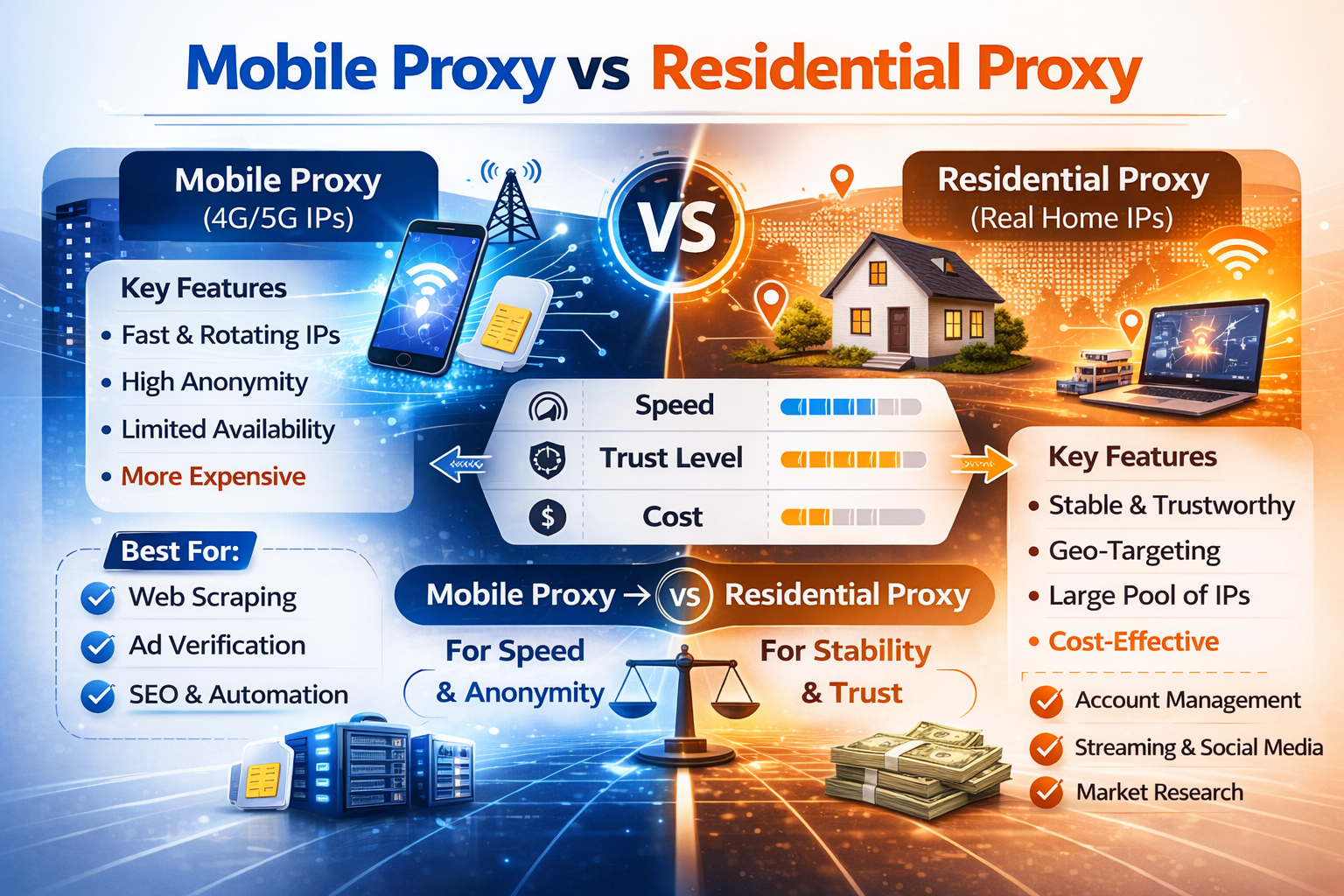
A residential proxy routes your traffic through real IP addresses assigned by ISPs to homeowners. Your connection appears as a regular household user.
Key Characteristics
- IPs from real residential devices
- Assigned by ISPs
- Rotating or sticky sessions
- Large IP pools
- More affordable
Mobile Proxy
What Is a Mobile Proxy?
A mobile proxy routes traffic through real mobile devices connected to 3G/4G/5G networks. Your traffic appears from a real smartphone.
Key Characteristics
- IPs from mobile carriers
- Shared IP ranges (CGNAT)
- Very high trust score
- Smaller IP pool
- More expensive
Key Differences
| Feature | Residential | Mobile |
|---|---|---|
| IP Source | ISP home users | Cellular carriers |
| Trust Level | High | Very High |
| Cost | Moderate | Expensive |
| IP Pool Size | Large | Small |
Final Verdict
There’s no universal “better” option — only the right tool for your needs. Residential proxies are better for scale and affordability, while mobile proxies are best for trust and ban resistance.
Visit ProxyAdvices.com